

How Much is Enough?
Gameworld Size - Part 1


Over the years I’ve made efforts to compare gameworlds sizes and cities in them. It’s valuable to see the amount of unique and repeated details to develop a game within a timeframe and team size. Knowing what’s enough physical space to tell the story and support the gameplay within it gives the project a confident foundation to build on.
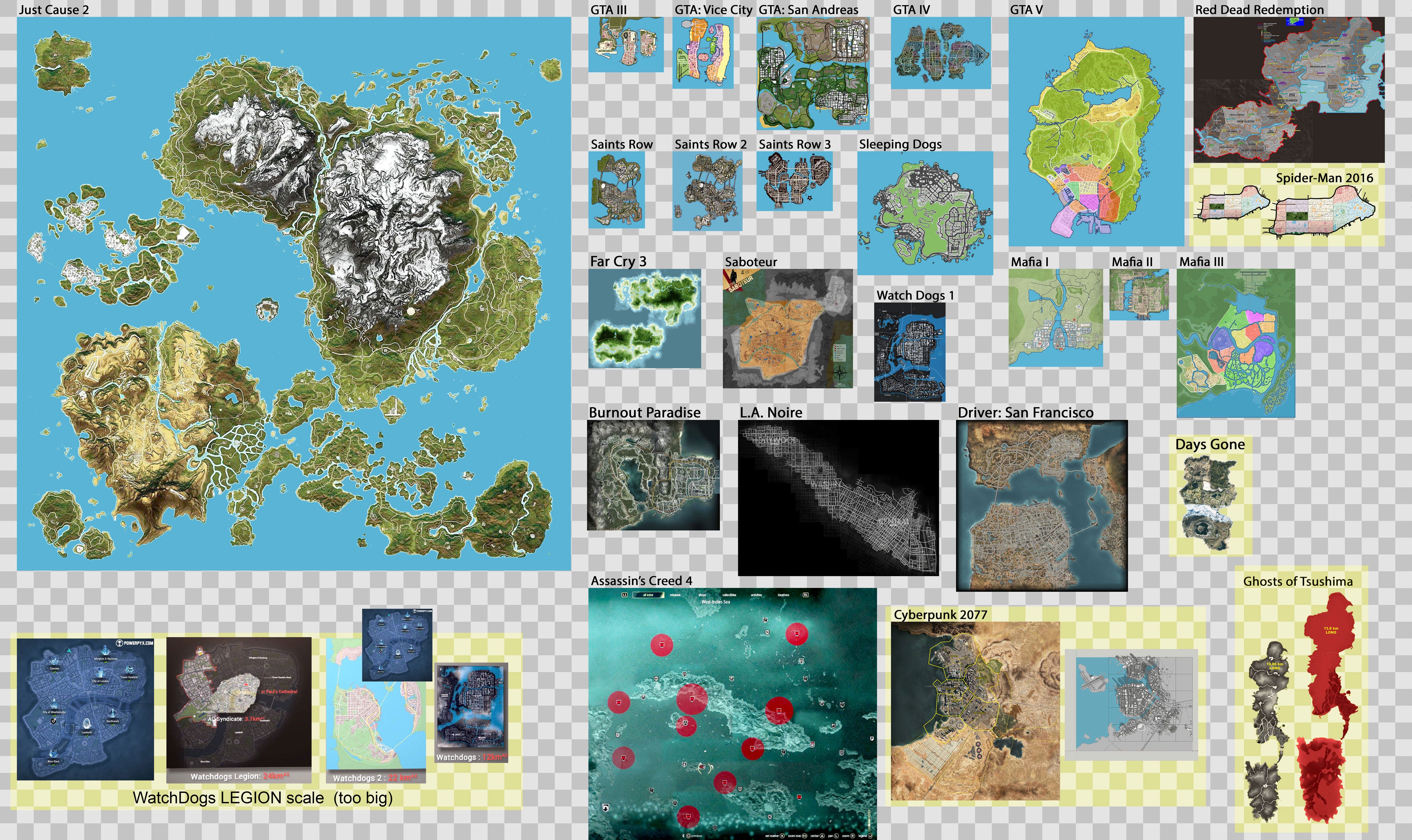
When something as massive as Just Cause was released, it was accomplished by using terrain which was far less time consuming to model than a large city. The game also featured a lot of modular buildings for asset re-use to create bunkers and forts.
To contrast that, a game city which only has vehicles and no playable characters, such as the Need for Speed or the Burnout series, doesn’t require multiple interiors, back alley combat spaces, and rooftop access . Cities with no player vehicles where you travel on foot, sprinting, climbing, and sometimes jumping, requires far more intense immediate layout metrics, such as the Assassin Creed series.
This comparison image is always a work-in-progress. Despite talking with Cyberpunk 2077 designers, I could only narrow Night City’s scale into two possible sizes. The same could be said for Insomniac’s Spider-Man Manhattan and Ghosts of Tsushima pictured. WatchDogs was another one I want to follow-up on.
How Much is Enough?
In preparation for more level design articles, I’ll next share this key image which has helped me over the years understand the scope of a proposed game space. How much is needed and how’s it used to create the illusion of a lived-in, believable environment?
This was made during my time on Bioshock 4 to help the team understand how big a city we were creating. Naturally, I’m not going to share any other observations about that project as it’s still in development.
Bioshock Infinite
The 3rd Bioshock game features a city in the sky with one of those districts being Emporia. It was one of the more easier city levels to parse and extract metrics from.
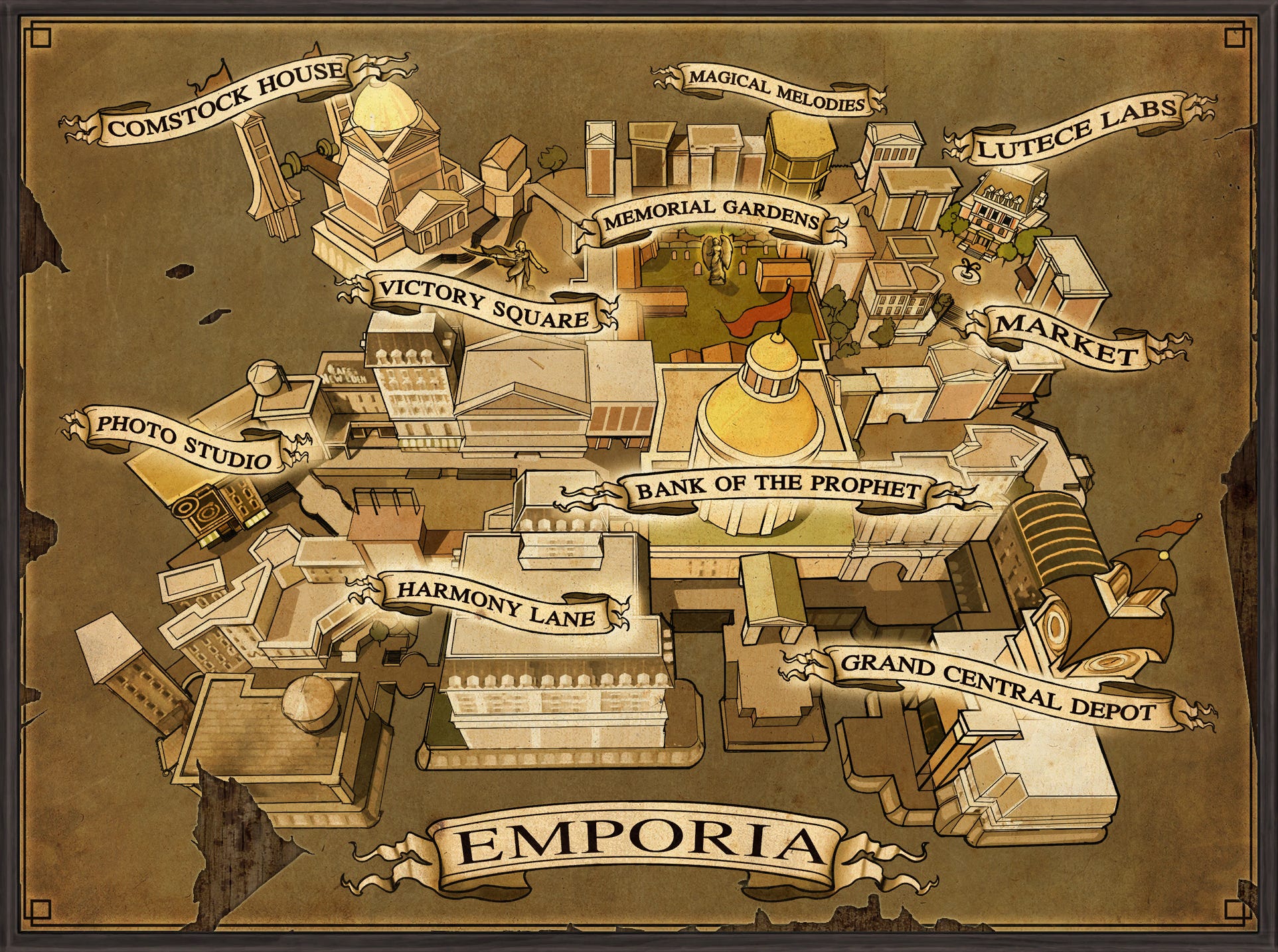
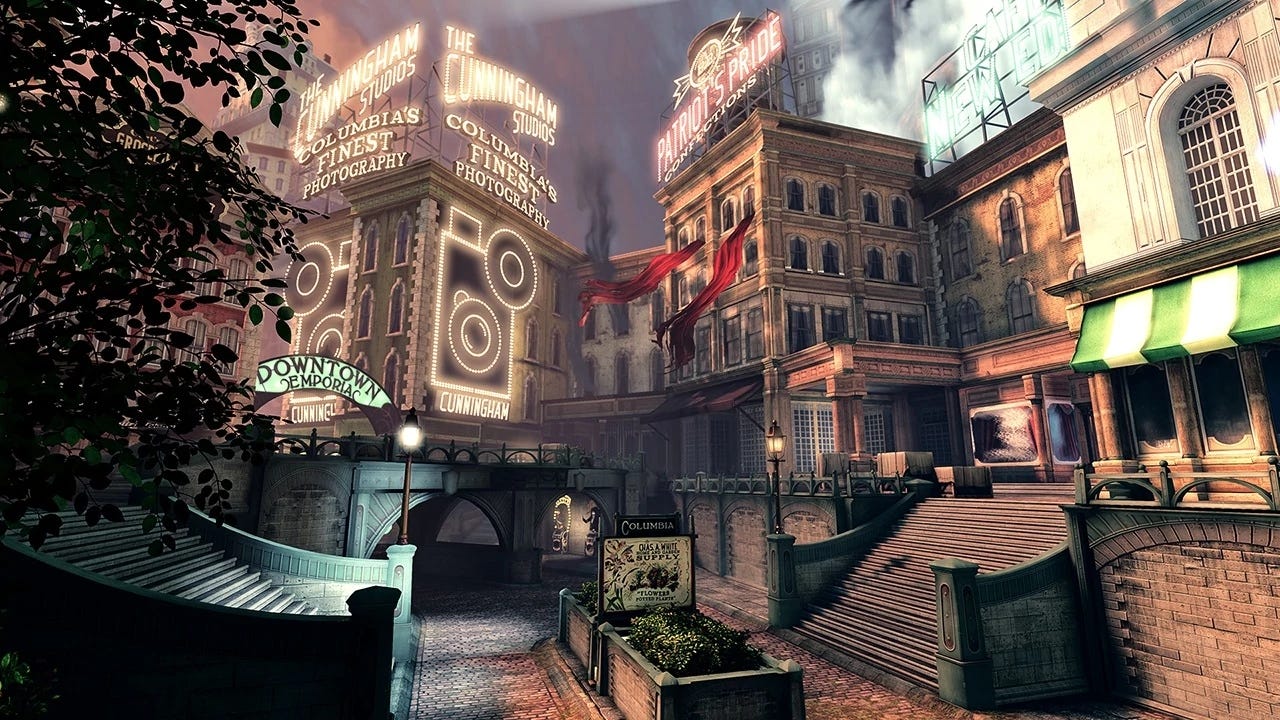
If you want a full walkthrough, take a look at this video:
Results
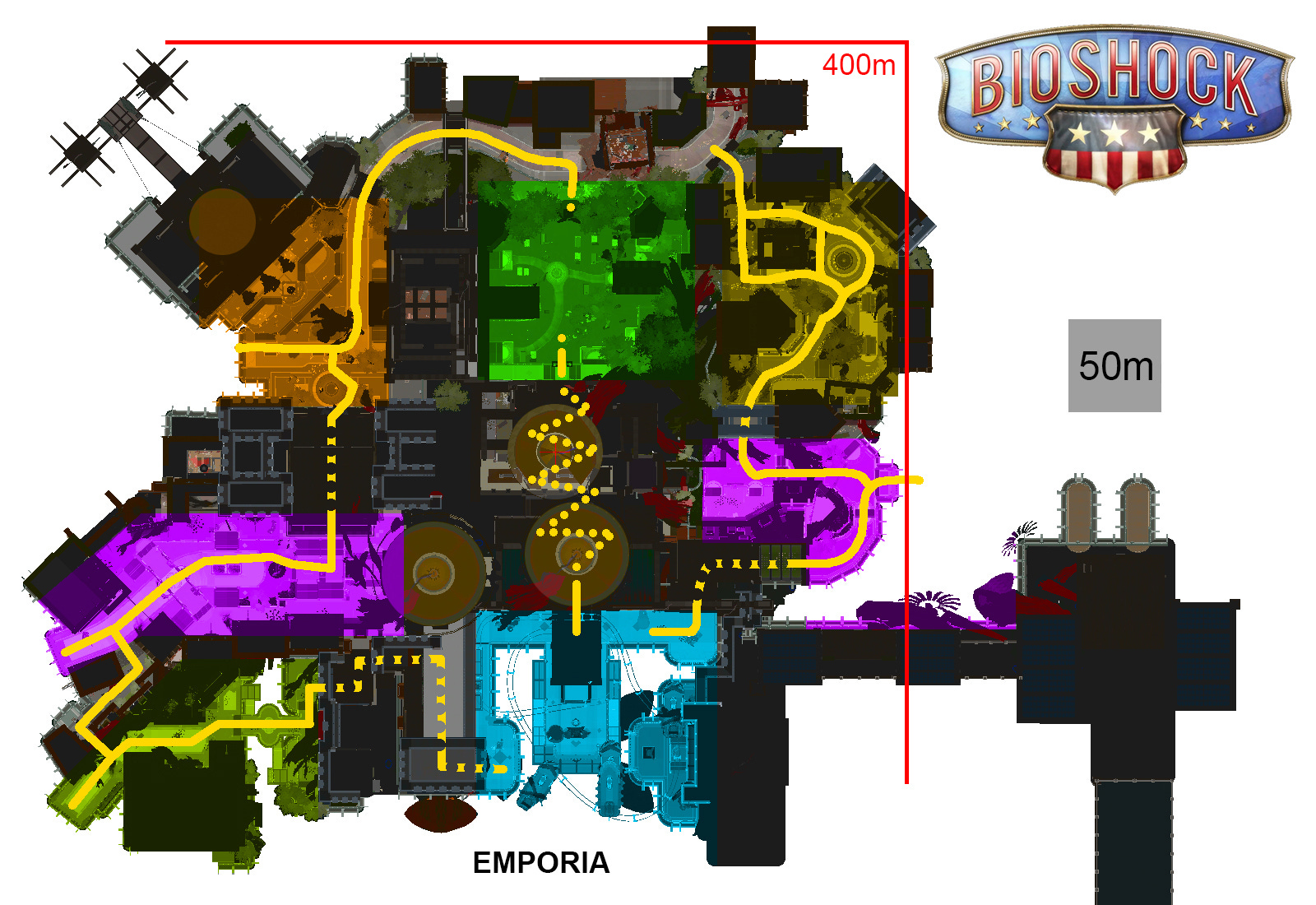
This is how Emporia measures to 400 meters. The yellow lines represent general player routes to areas explored. The other colors call out different Action Zones. These metrics came directly from Unreal 3.
Dishonored 2
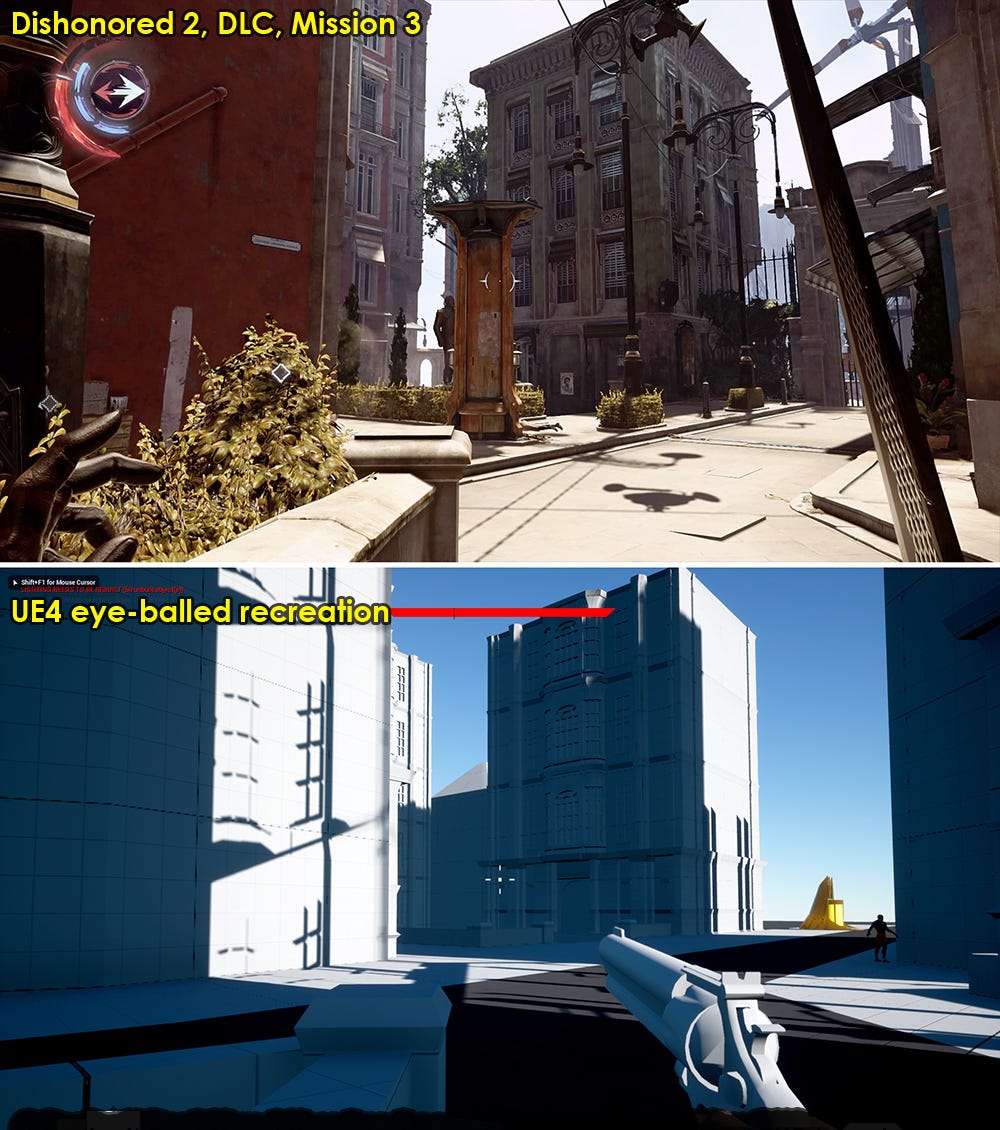
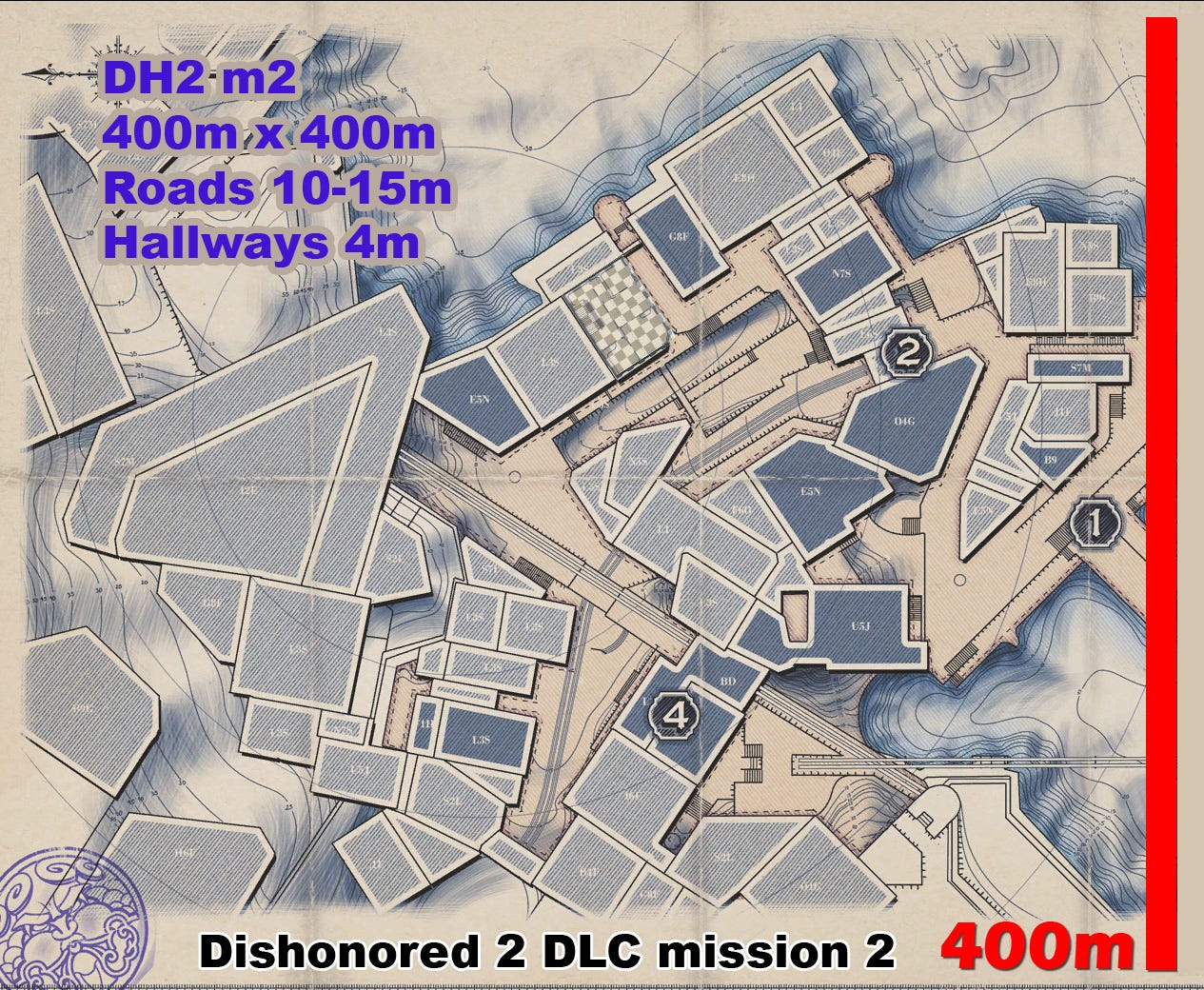
To compare Bioshock to another popular game at the time I used Dishonored 2’s DLC Death of the Outsider. I recreated part of the Upper Cyria District from Missions 2 and 3 in Sketchup. The results were imported into Unreal 4 as a workshop level to help understand the perception of implied roads vs. vehicle-metric roads. Both Dishonored and Bioshock feature foot travel with no player vehicles with little if any ambient vehicles, so their roads can be smaller than needed in game series such as GTA or Mafia.
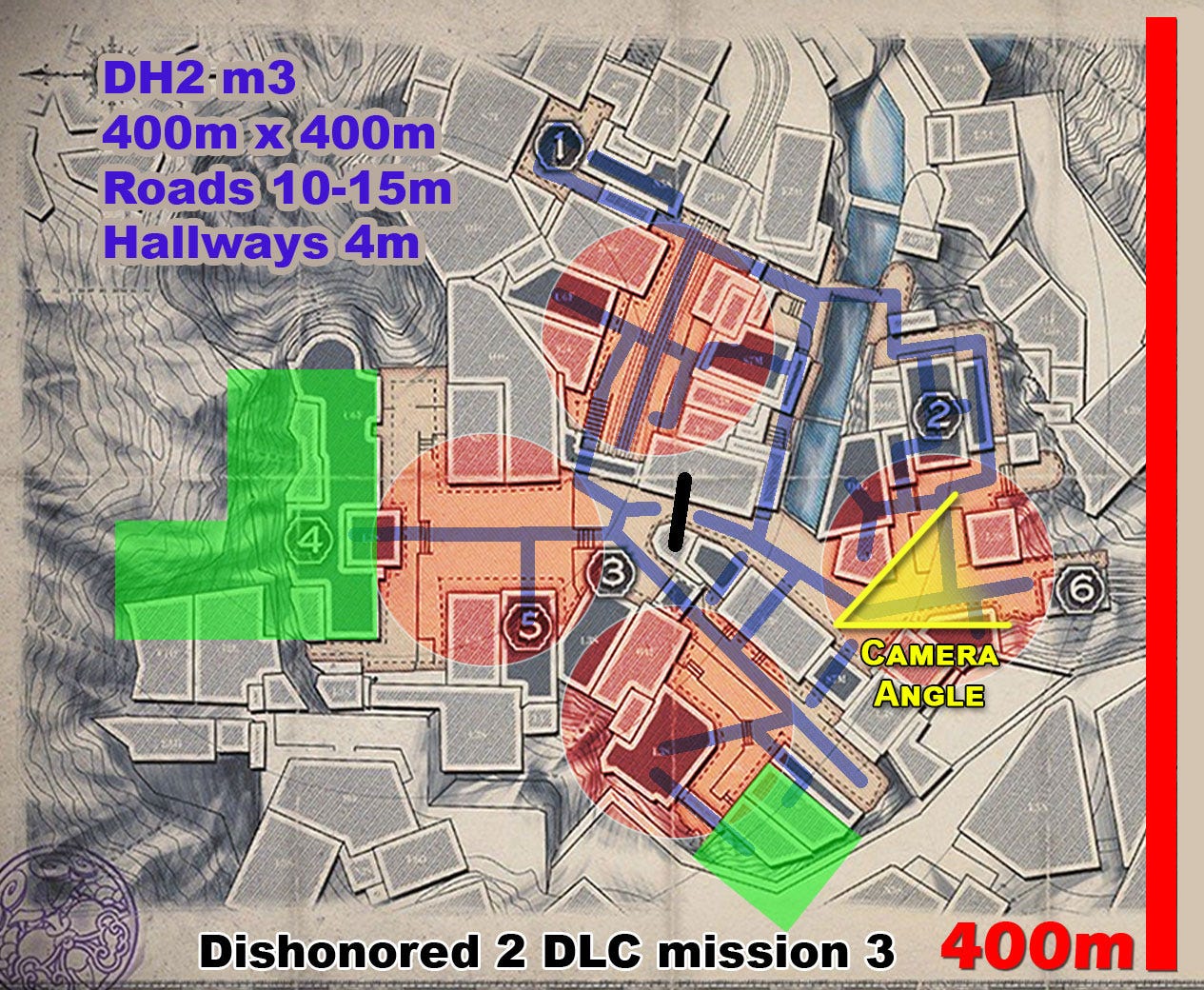
The view on the blockout is looking towards marker #6 on the topdown map.
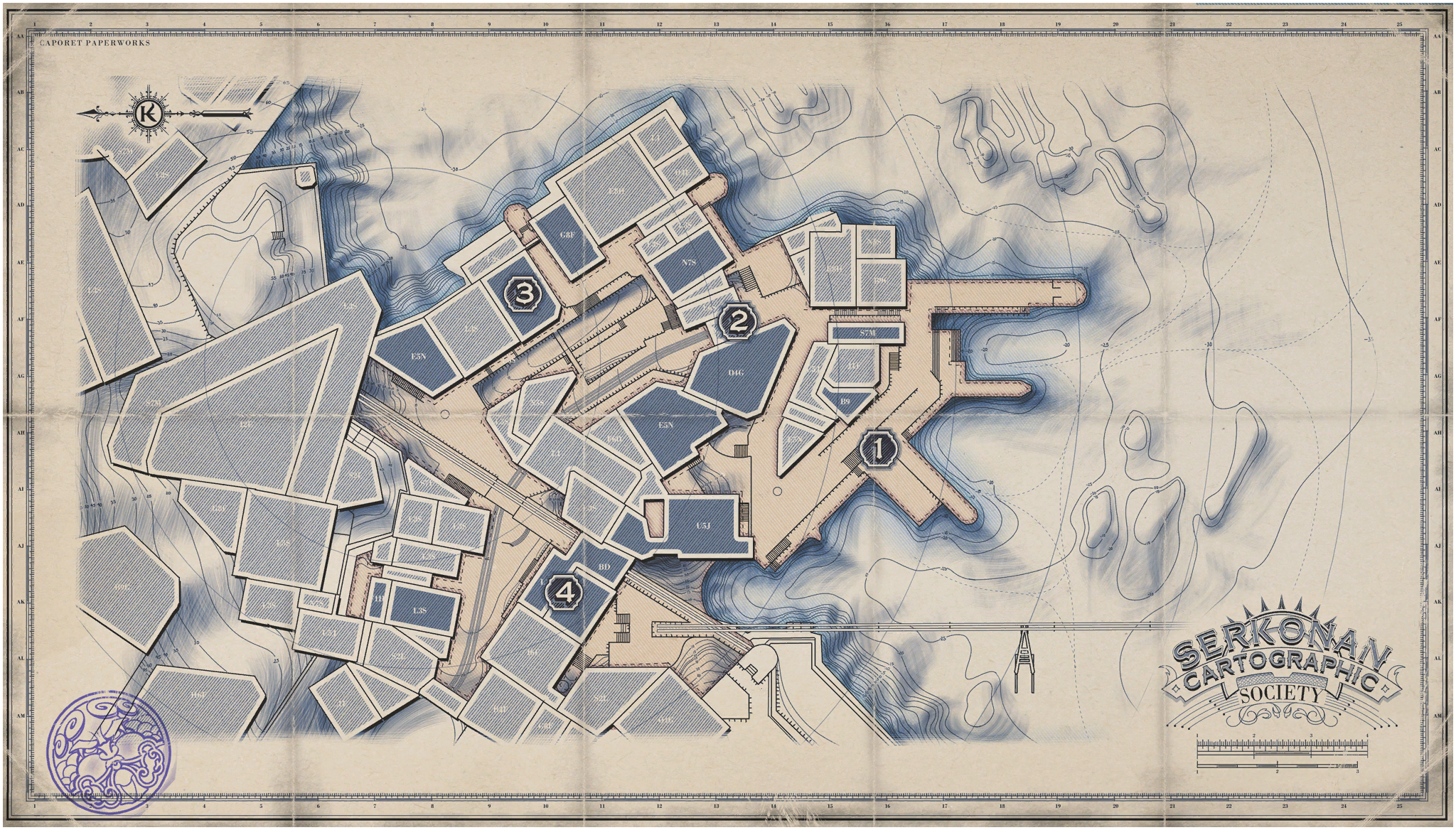
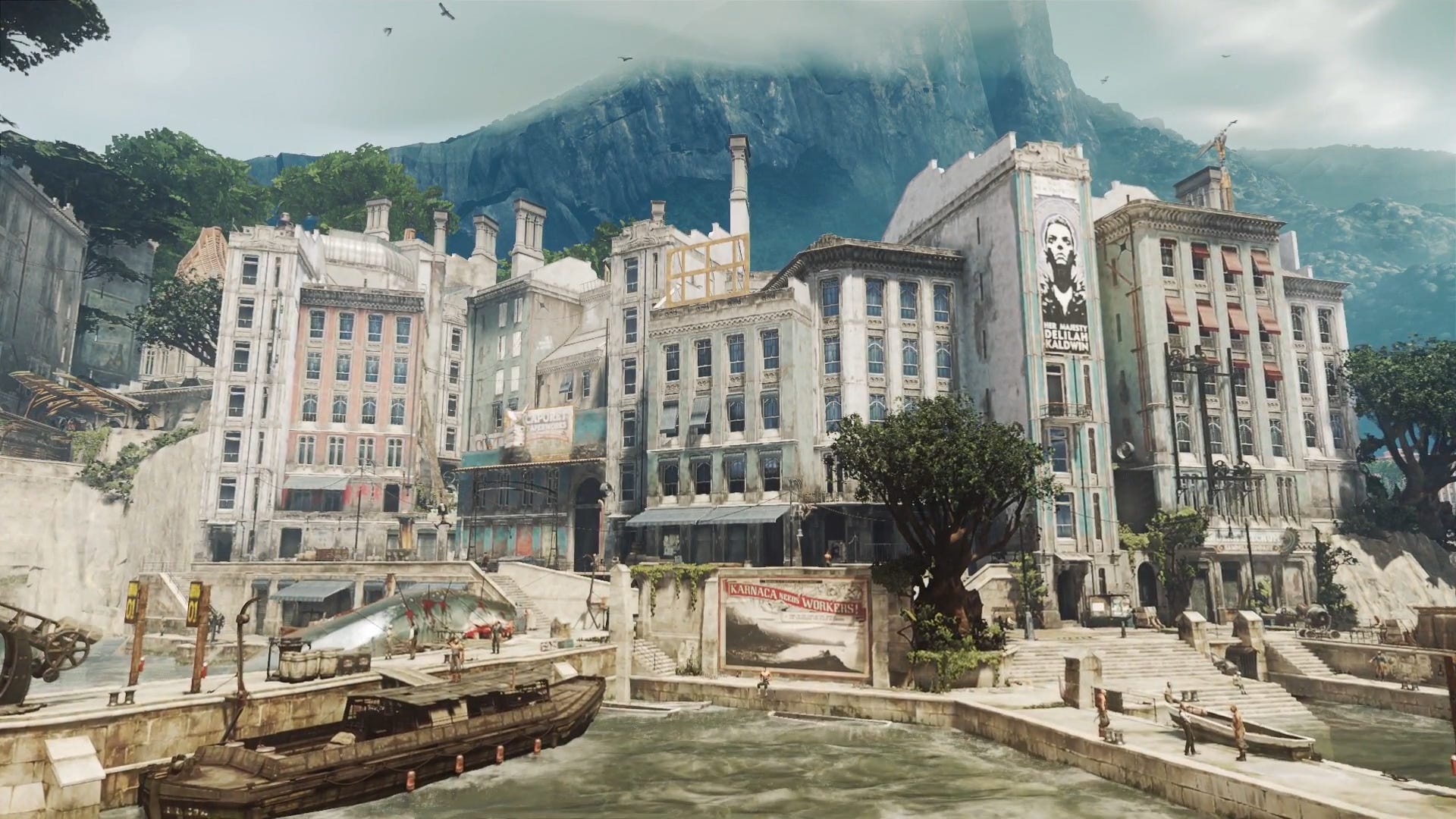
Once familiar with Dishonored metrics, I chose a different neighborhood for the final world size comparison for various city structure variety and identity reasons: the Campo Seta Dockyards.
Results
Compared to Bioshock’s Emporia, the Dockyard feels like it takes up less space even after metrics were considered and matched. Considering interior sizes however, it’s not that far off and good enough for gut instinct comparisons.
Deus Ex: Mankind Divided
The final example for city metrics I used at the time was Deus Ex’s Prague.
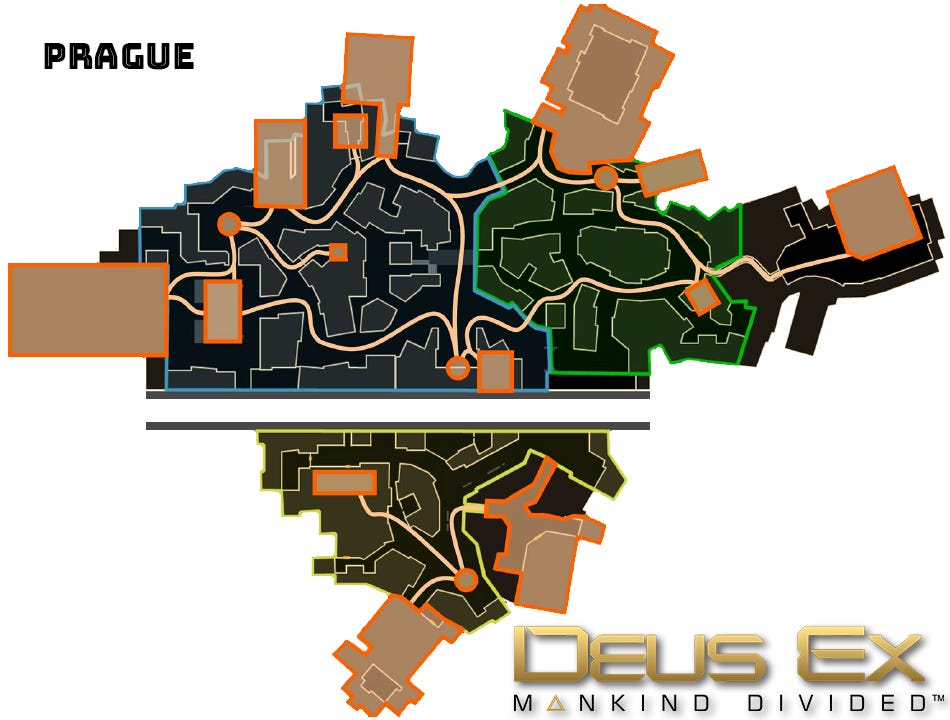
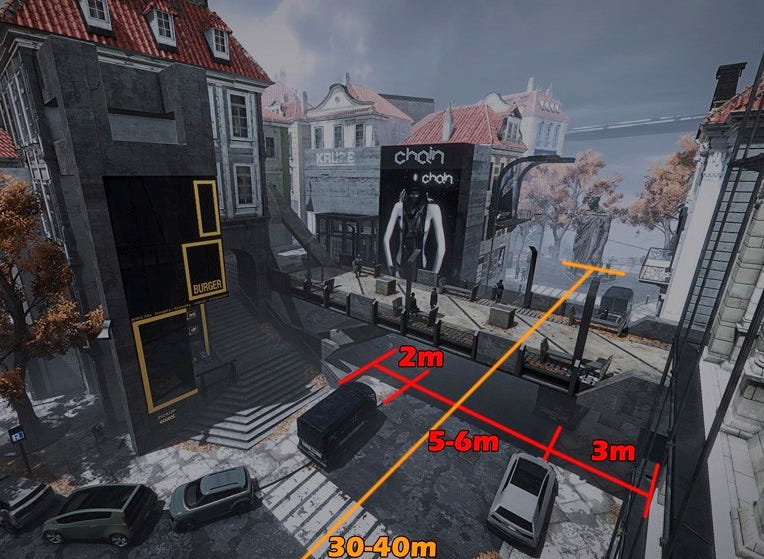
Even after speaking with the Senior Level Designer Sylvain Douce, I was never able to 100% verify scale. An in-game section using familiar prop scales, doorways, sidewalks, and streets gave me the metrics to extrapolate from.
Final Results
With these three examples, I can more easily convey world size to the team by matching the scale to prototype world layouts and stamping this image next to it. Helping teams understand the expected level-of-details across a measured space can prevent budget cut surprises later in the project both big and small.
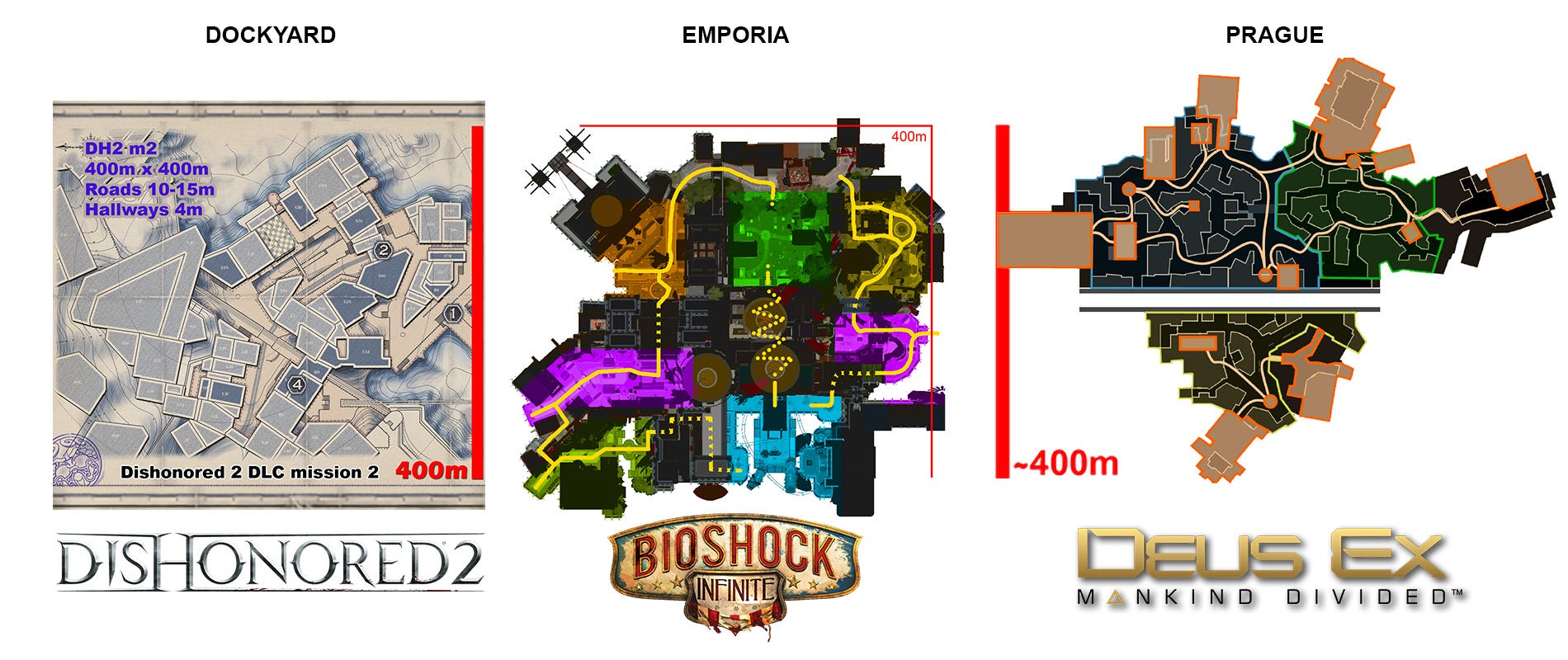
If anyone has proven better metrics for these three examples, please let me know! What are some other popular, wide-audience gameworlds or city levels that could be used to create a new example?
Next…
Part 2 shares a common metric I’ve used over the years to measure how many encounter spaces you want to plan production timelines.
To see past articles and my experience, visit:
CuriousGameworlds.com